
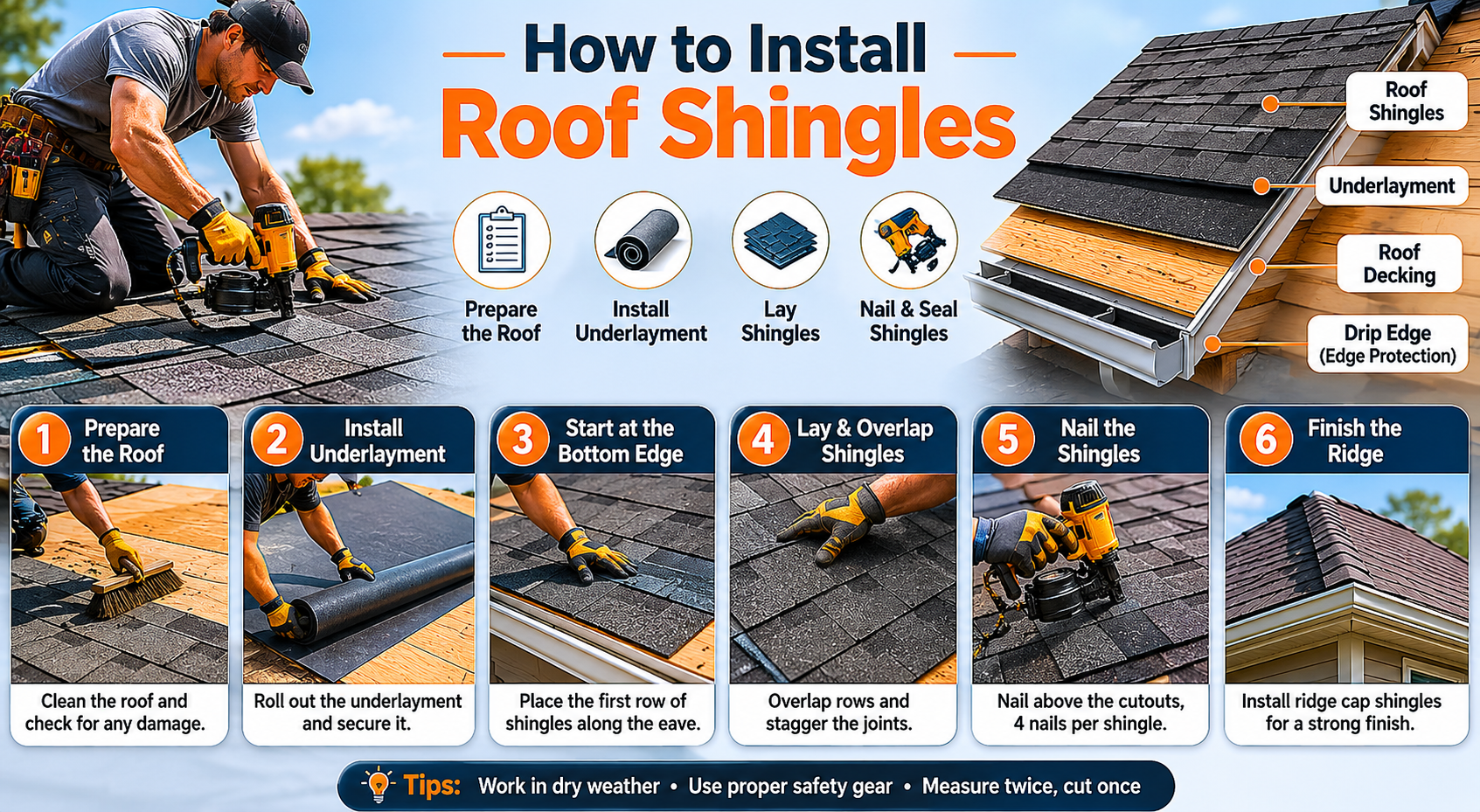
Whether it’s replacing an outdated roofing system or just putting up a new roof altogether, asphalt shingle roofing is the most popular choice. Expert roofing contractors start by removing the old roofing material, followed by making repairs to the roof decking and then installing the new roof shingles on top. A ridge cap and final inspection finish the process. So, if you’re a concerned homeowner eager to learn the complexities of installing roof shingles, you should read the blog below.
Expert Shingle Installation From Safety To Final Inspection
Do you have a roofing project coming up soon? Or maybe you’re a curious reader, wondering how exactly shingle roofs are put up. Well, you’ve come to the right place! Though, it’s always better to leave roofing work to experienced and skilled experts with the appropriate safety gear, learning about how they prepare the deck, add underlayment and install the shingles from the edges up is a good idea.
Here is how the process would go.
Safety First
Work so high off the ground is dangerous, with injuries being pretty common in the roofing industry. So, to keep themselves safe, quality roofers start by putting on safety goggles, boots and gloves. Then they wear safety harnesses and climb on top of sturdy ladders.
Roof Removal & Inspection
Next step, the technicians meticulously remove all the old shingles, nails and underlayment; stripping the roof till they reach the roof decking underneath. Once there, they assess the decking for signs of weakening and moisture damage.
Decking Repair
A roof is only as good as its base. So, before the team can do anything, they need to make repairs to the existing decking. They replace all the rotted and weakened wood; restoring the structure’s integrity and readying it for the roof shingles.
Drip Edge Installation
Now, we need to ensure that the decking actually stays safe once the roof shingles are in place. So, the roofers install a metal strip along the eaves and rake; making sure that no water can penetrate and reach the decking.
Underlayment Installation
To waterproof the roof further, the residential roofing contractors will move on to laying down layers of synthetic underlayment or felt paper on top of the roof deck. They’ll ensure that it overlaps by 2-4 inches to stop leaks.
Starter Strip Installation
Before the roofers can get to the actual roof shingles, they need to install a starter strip. This is a row of shingles along the eaves of the roof that has had its tabs removed. It works to seal the gap over there.
Roof Shingle Installation
Okay, next step. Now, the roofers start by placing the very first shingles flush with the starter strip. They start at the bottom corner, slowly making their way up and to the top of the roof ridge.
Shingle Nailing
Depending on the type of shingles used, the roofers will either use four or six nails per shingle. This will secure them in place even in windstorms. To be sure that they’re using the right amount, the team will follow the manufacturer’s instructions.
Shingle Staggering
Once the first course is complete, the roofers will move on to the second row. They’ll cut the shingles 6 inches shorter than the previous one, starting from the corner again. The subsequent rows will also follow this pattern.
Flashing Installation
Once that step is complete, your shingle roofing contractors will move on to securing the most vulnerable parts of the roof. They’ll nail in thin metal strips to roof edges, chimney corners and valleys; ensuring that not even the smallest drop of rain water can sneak in.
Ridge Cap Installation
Finally, the expert roofers will install a last row of shingles along the ridge of the roof. This step not only protects the roof, but also gives it a seamless and professional finish.
Final Inspection
Once all the work is done, the roofing experts will go around the roof, looking for loose shingles, missing nails or flashing. They’ll make adjustments where necessary, before declaring your roof shingles installation complete.
Conclusion
To conclude, installing roof shingles is a technical process that is best left to experienced and certified technicians. They start by assessing the strength of the roof, followed by making necessary repairs and adding the drip edge. Starting at the bottom, they work their way up to the ridge, before adding the ridge cap. After a final inspection, the roofing project is complete. We hope this blog was insightful. For more insights, please ask.
FAQS
What is the lifespan of asphalt shingles?
Depending on quality and installation, they last 20-30 years.
When is the best time for roof shingle installation?
The best times are usually the fall, late spring or early summer seasons.
How far in advance should I book a shingle roof installation?
You should try to book the roofing service at least 1-3 months in advance.